
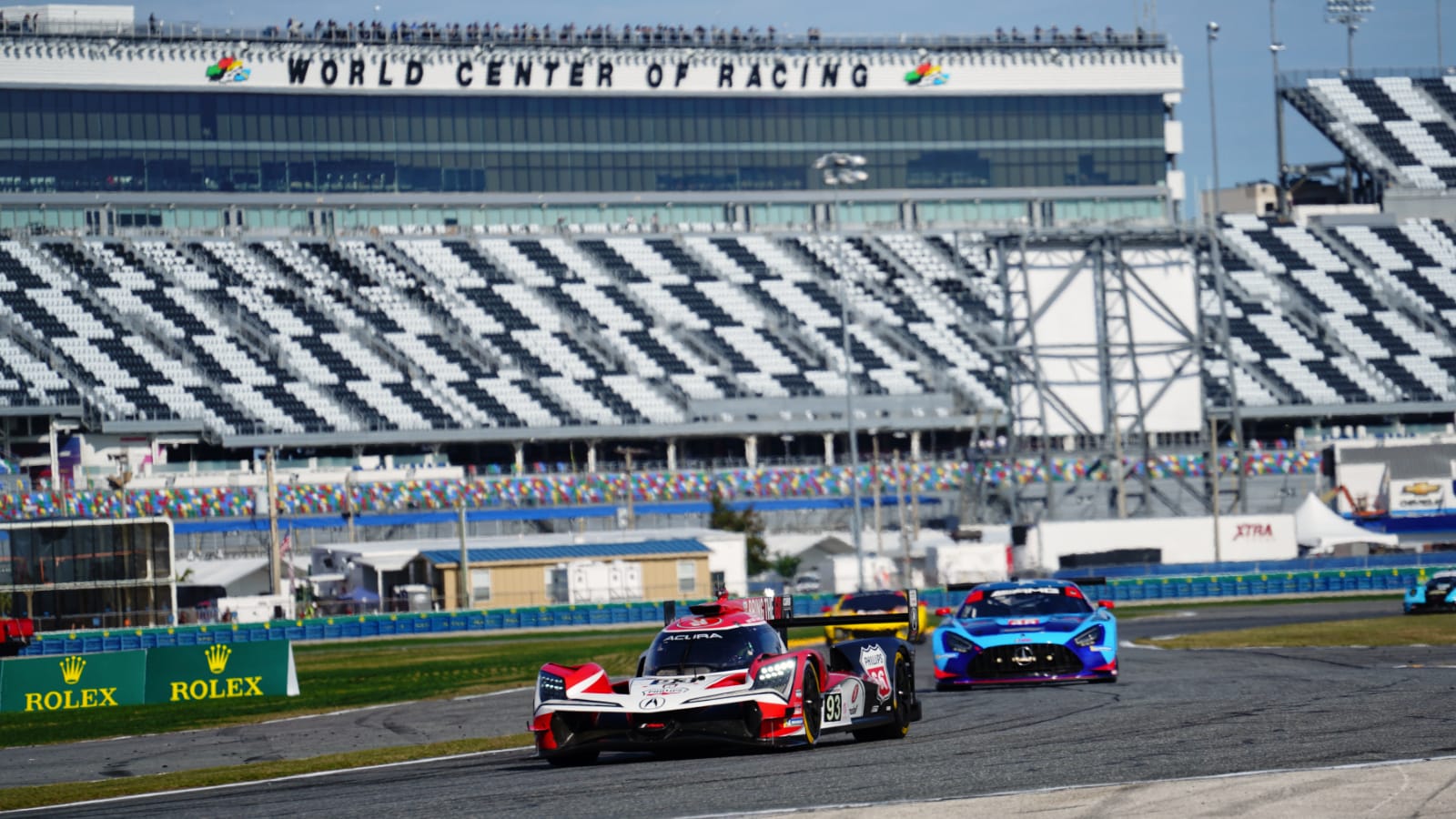

Download The Racing Line on iOS today and get 70% off a year's subscription!
Qualifying for the Daytona 24 Hours never tells the full story, but it always tells an important one. This year’s session was a perfect reminder of that. Across all four classes, the margins were incredibly thin and no one walked away feeling like they had the weekend figured out.
But, qualifying isn't important in a 24 hour race, especially one where the field is kept relatively close together and bunched up, like it is in the IMSA Sportscar Championship.
The practice runs tell us a lot more about how the race may look and what we could expect from what has, essentially, turned into a 24 hour sprint.
Support Only Endurance's independent sportscar journalism today from £1/$1/€1 a month
Acura top long runs and average pace
Acura didn't have the ultimate pace in the Roar test, putting them a bit behind the leading Porsches and Cadillacs.
But, either they were intentionally sandbagging as not to show their hand too early, or they found what they were missing over the few days between the Roar and the first practice session for the 24 hours themselves.
Tom Blomqvist's 12-lap stint, set in the first session, had an average laptime of 1:36.267, over half a second quicker than Fred Vesti's stint in the #31 Action Express Cadillac, which had initially taken pole until a technical infringement put them to the rear of the GTP field for the start.
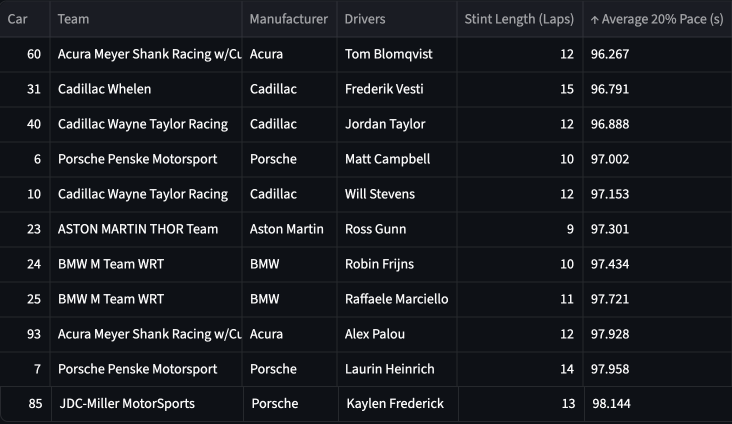
Vesti's 15-lap stint was a few laps longer than Blomqvist's, and was also set in the second session where temperatures were significantly lower due to being held at night.
Temperatures peaked towards the end of the first session at around 22°C, while track temperatures were up at around 28°C. This is compared to the second session, which started in near-darkness at around 18°C and only got colder from there, with track temperature on a similar trend, 20°C and going down.
The lower track temperatures offer improved grip and means tyres wear less and thermal degradation is lower. Lower air temperatures, meanwhile, help engines run cooler, assisting with higher power output.
For context, Acura's fastest stint in the second session was a 1:37.516, set by Colin Braun in the #60 machine. However, this was only a 7-lap stint, not long at all when a race stint is in the region of 30 or so laps.
Indeed, the #60 car's longest stint in the second session was only 7 laps – twice. The #93 did a slightly longer stint, 12 laps, with Alex Palou at the wheel, but this was slower than Braun's shorter effort, a 1:37.928.
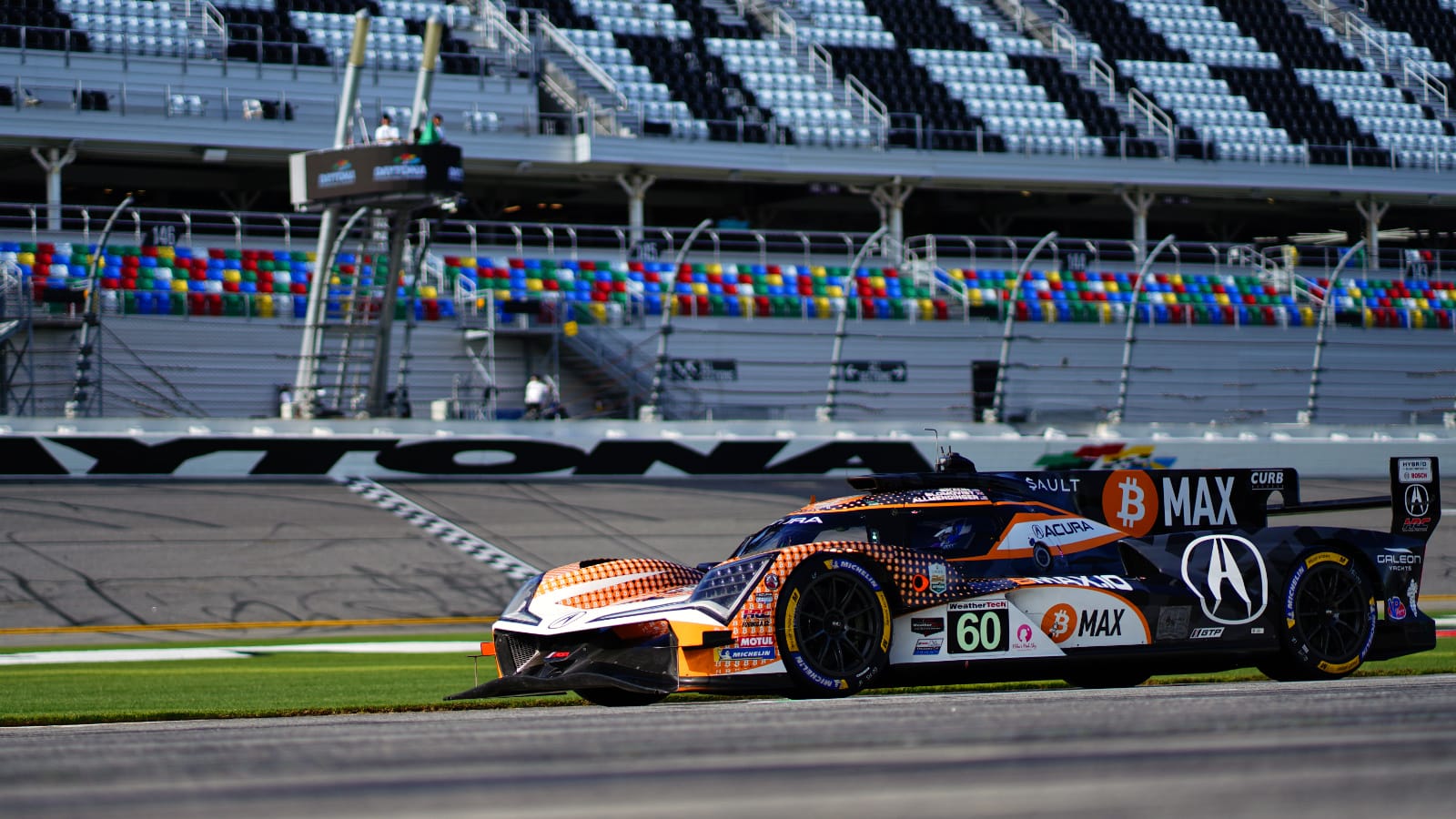
'Honestly, I feel good but I don't know how good,' said Palou when asked by Only Endurance where he believes Acura stacks up compared to the competition.
'Are we top three good, or just top six good. Honestly, I don't know.
'I think we have a good car and we have good pace, but I don't know what everybody is doing yet. I don't know if people are running 100%, or 95 or 90,' concluded the IndyCar star.
The fastest Porsche was Matt Campbell in the #6 machine, setting a 1:37.002 on average over a 10-lap stint in the second session. While both the #31 Cadillac's stint and Campbell's 10 lapper were set in the same session, Vesti set his early on in the session while Campbell set his as the session began to draw to a close, when the track had cooled down, although only by a few degrees celsius.

In between Vest's #31 Cadillac and Campbell in the #6 Porsche, was Jordan Taylor in the #40 Wayne Taylor Racing Cadillac. The younger Taylor brother set a 1:36.888 to slot between the two, in the first session, over 12 laps. This was just under a tenth slower than Vesti over the course of the stint, and a couple of tenths up on Campbell.
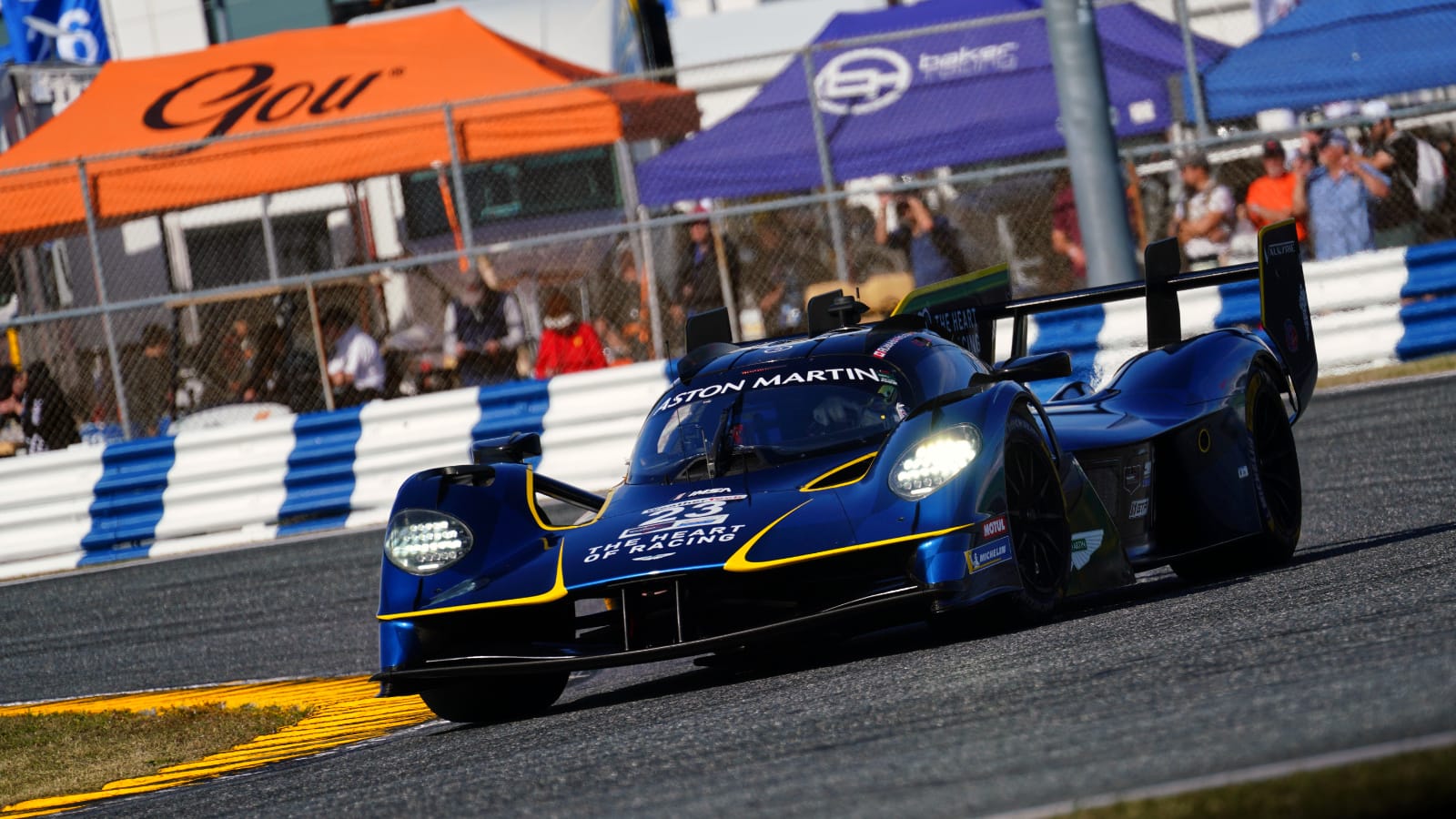
The other two manufacturers were next up, with Ross Gunn in the #23 Aston Martin THOR Valkyrie setting a 1:37.301 over 9 laps, while Robin Frijns had the fastest BMW long run in the #24 car. The Dutchman's 10-lap session 2 stint produced a 1:37.434, the slowest manufacturer in terms of long runs.
BMW have struggled somewhat for pace this weekend, with WRT, BMW's factory partner team, still bedding in IMSA competition, plus a new evo update to the M Hybrid V8 to understand.
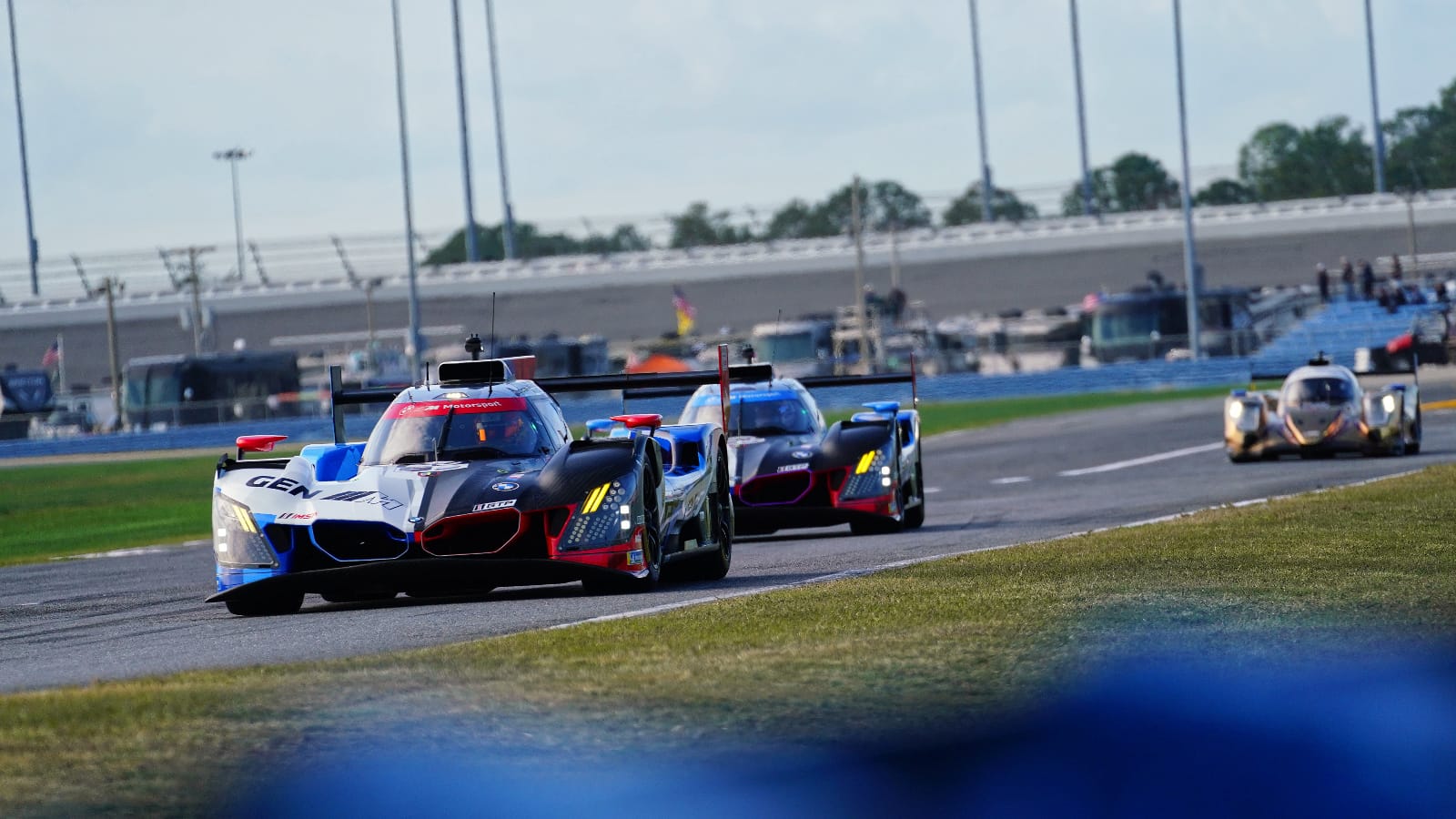
Nevertheless, they're making progress, as Dries Vanthoor told Only Endurance.
'It's clear that we are lacking some speed,' said the Belgian.
'I think the last session we did, we actually we made a step forward. We found some some performance in the car which I think is positive, especially after a tough couple of days, but how much we gain is difficult to say.'
The data backs this up. From the first two sessions, the BMWs had a best average long run of a 1:37.434, with Robin Frijns at the wheel of the #24 car in the second session for the 10 lap stint. The third session on Friday morning was better, with a best average of 97.009, from Sheldon van der Linde also in the #24 car.
However, due to the disrupted nature of the third session, with three red flags over the 1h15m, this stint was only 5 laps long. That said, it was conducted in higher temperatures...
'I think obviously we are going to be still a little bit off,' D. Vanthoor continued.
'But anyway, luckily, the 24 hours, a lot can happen. We have to just survive and try to make it to the end and then we will see where we end up.'
Average pace produces similar picture
The average pace charts, taking all laps, filtering to find the best 20%, and then creating a single average value, show a similar yet different picture.
The #60 Acura — not the #93 – is still top, but the #7 Porsche is now second, with the #31 Cadillac third. That puts 3 manufacturers in the top 3, which promises a close race between them.
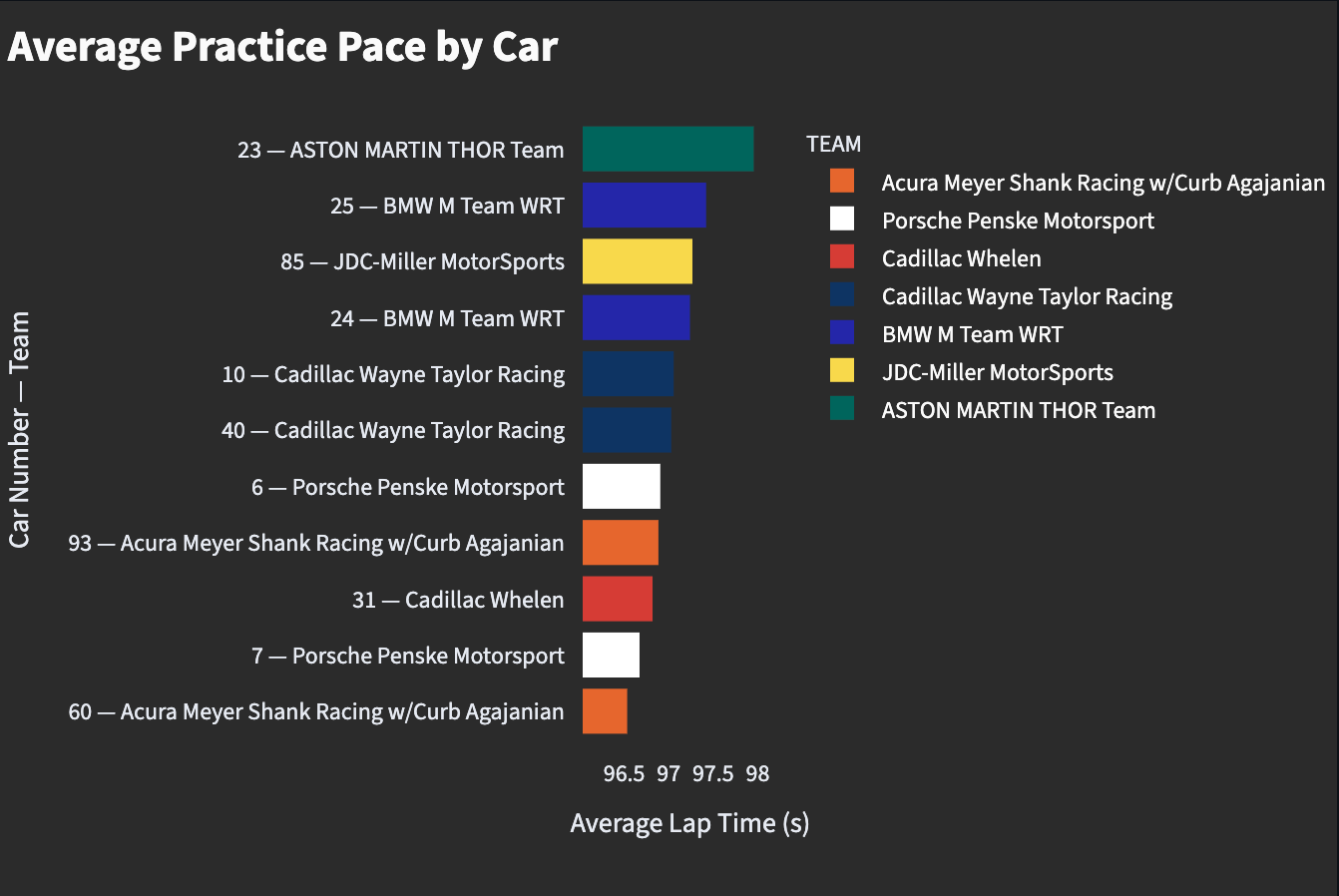
The #60 Acura is a tenth and a bit ahead of the #7 Porsche, with the Porsche ahead of the #31 Cadillac by roughly the same amount. The other cars from the same manufacturers aren't far away either, with the #93 Acura, #6 Porsche, and both Wayne Taylor Cadillacs covered by less than two tenths.
As already discussed, BMW look to be a bit behind, in both the long runs and this metric. While not hugely off, they are behind all their manufacturer competition apart from Aston Martin, with the German manufacturer struggling for ultimate pace, even with the performance found in practice 3.
Practice promises a close race
So what does all this mean? If the practice long runs and average pace figures are anything to go by, we have a close race in store at Daytona.
Of course, this race is often defined by who can make the most of strategy and the most of the numerous caution periods. If you're able to stay on the lead lap for 20 hours, the 4 hours remaining start to mean something as teams begin to calculate fuel and tyre stops by counting back from the end of the race.
'We just have to try to get to a point where, on strategy, we can only go for singles at the end and then and then use that because I think going for doubles will hurt us there,' concluded D. Vanthoor when speaking to Only Endurance.
Image: Kevin Dejewski
This post is brought to you by The Racing Line, your personalised motorsport calendar app. Get session times for over 150 series, from rally to bikes, single seaters to sportscars with customisable notifications and built-in streaming. Download on iOS today!